
Most people don’t think about fencing until something goes wrong. A gate was left open. A shortcut that someone should not be taking. A boundary that exists on paper but not in real life. That’s usually when fencing stops being “just a perimeter” and starts becoming a security decision.
Today, a security fence does far more than mark a property’s boundaries. It shapes how people move, where access is allowed, and how risk is managed day to day. Whether you’re planning home security fencing, upgrading a commercial site, or trying to bring order to areas like parking zones or garage bike storage, perimeter planning works best when it’s intentional and connected to how the space is actually used.
The challenge is that not all fences solve the same problem. What works for a quiet residential property may fall short for a warehouse, school, or office campus. Different environments have varying needs for visibility, traffic patterns, and security. Choosing the right materials and features means understanding those realities before installation begins.
In this blog, we’ll break down practical security fence ideas for residential, commercial, and institutional properties.
We’ll also show how GS Parcel helps plan and install security fencing systems that hold up long after day one, not just on paper, but in real-world use.
The Significance of Security Fences
Rising property theft, unauthorized access, and liability concerns have made perimeter security a priority for many buildings. Whether it’s a residential community, warehouse, school, or corporate campus, fencing sets expectations before anyone even steps onto the property.
Thoughtful security fence ideas help achieve several goals at once:
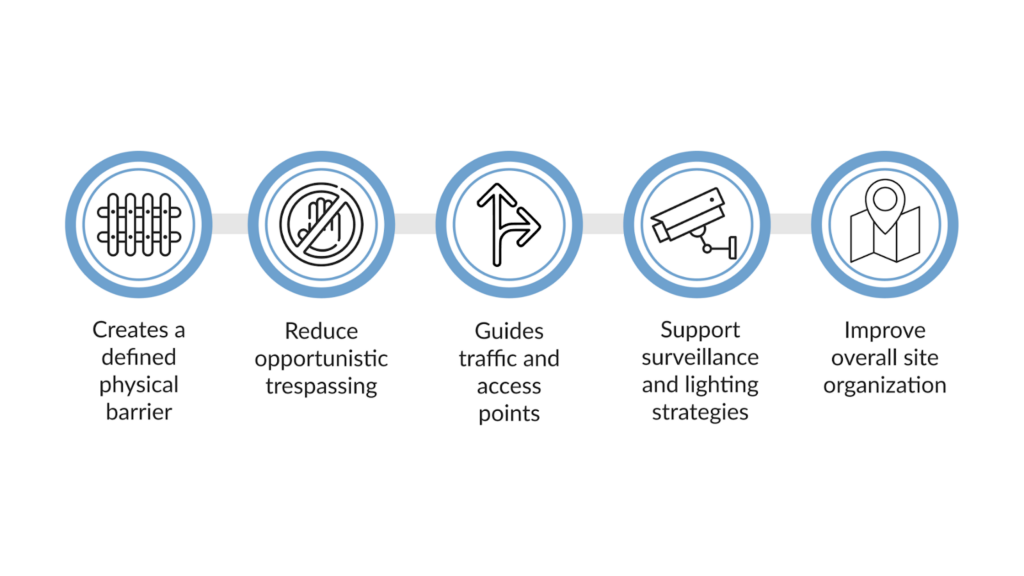
- Creates a defined physical barrier
- Reduce opportunistic trespassing
- Guides traffic and access points
- Support surveillance and lighting strategies
- Improve overall site organization
A fence that is poorly planned or incorrectly installed can create weak points, while a well-designed system strengthens the entire security approach.
Understanding Your Security Needs Before Choosing a Fence
Before getting into materials, heights, or add-on features, it’s fundamental to step back and clarify what the fence is actually meant to protect and how the space is used day to day. Security works best when it’s designed around real behavior, not just boundaries on a plan.
Residential, Commercial & Institutional Needs Are Not the Same
Residential properties typically need fencing that protects without feeling closed off. Privacy, curb appeal, and controlled access matter just as much as security.
Commercial and industrial sites operate differently. They require fencing that can withstand constant use, discourage unauthorized entry, and clearly define restricted areas.
Institutional environments like schools, hospitals, and municipal facilities add another layer. Safety, visibility, compliance, and predictable access routes all have to work together.
The most effective security fence ideas always begin by matching the fence to the property’s purpose, not by forcing a one-size-fits-all solution.
Assessing Risk and Exposure
Not every property faces the same level of risk. A warehouse storing high-value inventory has very different security pressures than a retail plaza or office park. Location, operating hours, pedestrian traffic, asset value, and even neighboring properties all influence the level of protection needed.
GS Parcel supports this early planning phase by helping teams evaluate real-world exposure and usage patterns. Instead of designing for assumptions, we help align fencing solutions with how the site actually operates, resulting in stronger security and fewer weak points over time.
Security Fence Ideas for Residential Properties
Residential fencing has a tricky job. It needs to protect people and property without making a home feel closed off or hostile. The best residential security fences feel intentional. They guide movement, define boundaries, and discourage intrusion while still fitting naturally into the neighborhood.
Ornamental Metal Fencing
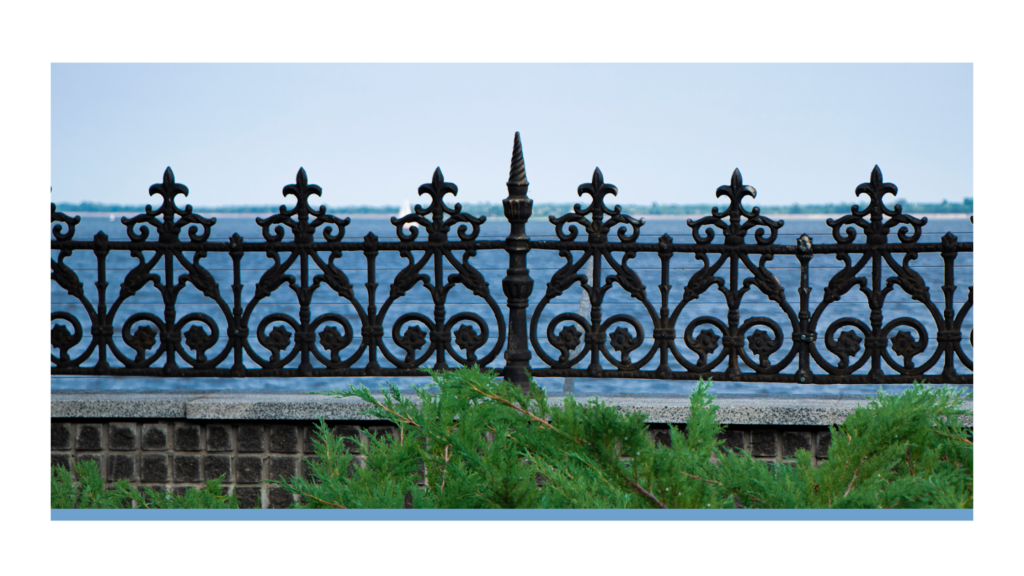
Wrought iron or steel ornamental fences remain some of the most effective security fence ideas for residential settings. They offer strong perimeter control while maintaining visibility, which is vital for safety and curb appeal. These fences work exceptionally well around front yards, pools, courtyards, and shared community spaces where openness matters.
Subtle design elements like finials, picket spacing, and height variation help deter climbing without making the fence feel aggressive.
Privacy-Focused Fencing with Reinforcement
Wood, vinyl, and composite fences are often chosen for privacy, but they can also support security when designed correctly. Proper height, reinforced posts, secure gate hardware, and strategic lighting all make a significant difference.
These security fence ideas are commonly used for backyard perimeters, side yards, alleys, and property edges where visual separation is just as necessary as protection.
Low-Visibility Perimeter Fencing
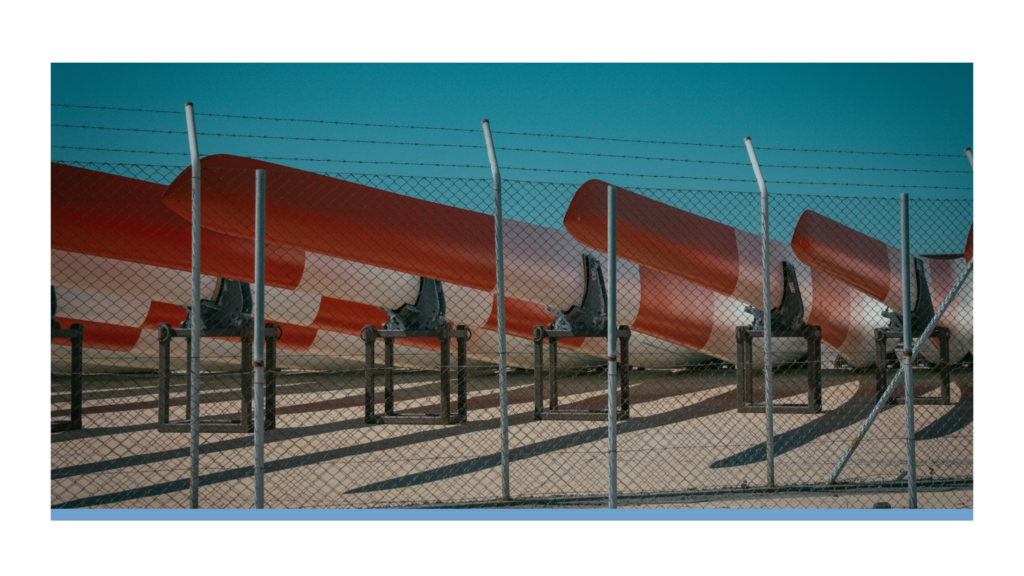
Not every residential fence needs to stand out. In some cases, subtle fencing placed along rear property lines or landscaping edges provides boundary definition without dominating the view. This approach works well for larger residential lots or communities that want security without visual clutter.
Controlled Entry Gates
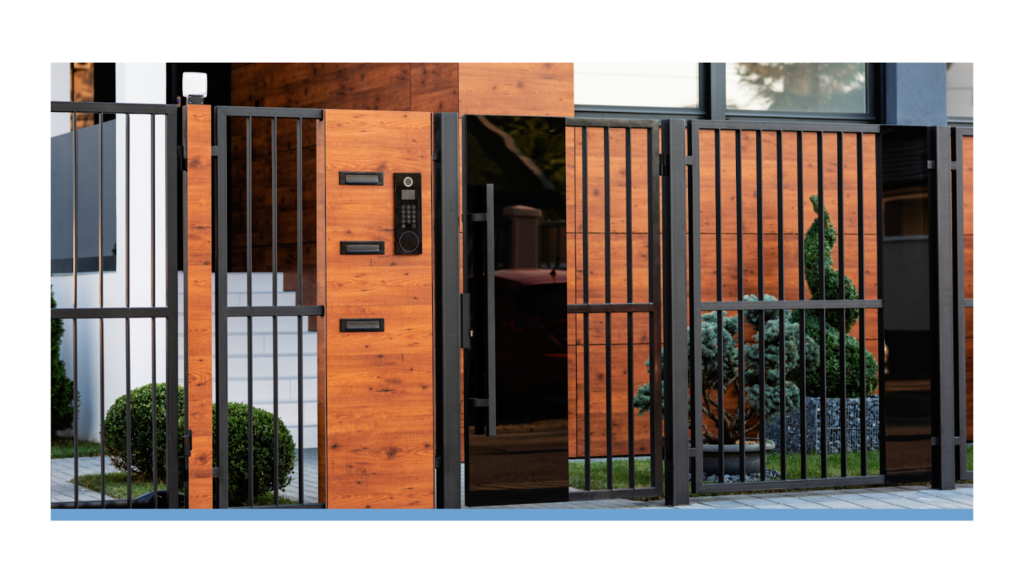
Gates are often where residential security breaks down, so thoughtful gate design is critical. Manual or automated gates can be paired with keypads, smart locks, or intercom systems to control access without disrupting daily routines.
Well-placed gates also help reduce accidental access points that often get overlooked in residential layouts.
Lighting-Integrated Fencing
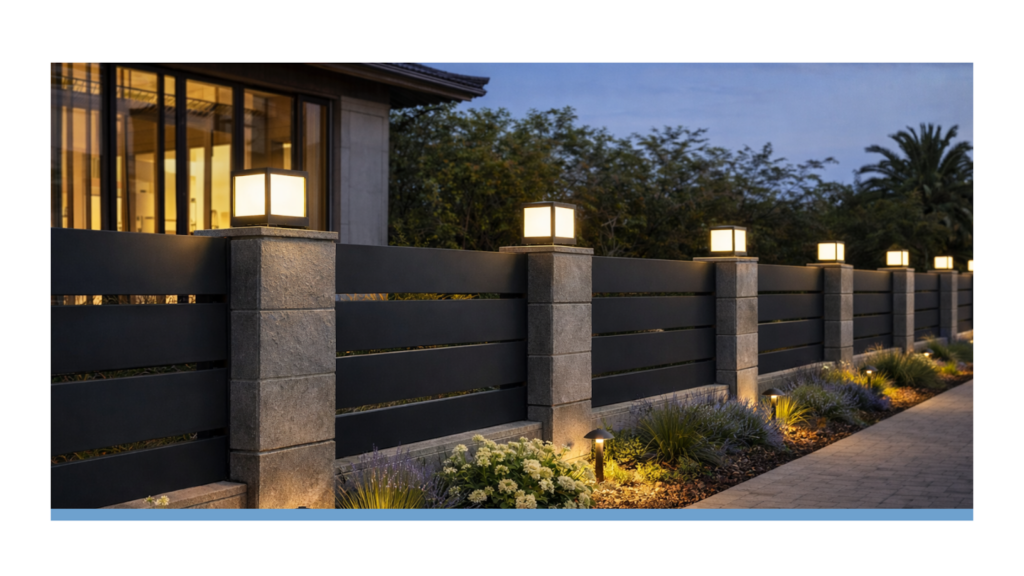
Lighting plays a quiet but influential role in residential security. Fence-adjacent lighting improves visibility, discourages tampering, and makes outdoor areas feel safer at night. When combined with fencing, lighting supports both security and usability of outdoor spaces.
GS Parcel ensures residential fencing and gates are installed with proper alignment, anchoring, and long-term durability in mind, so the system remains secure and visually consistent over time.
Security Fence Ideas for Commercial & Industrial Properties
Commercial and industrial sites rely on fencing to do more than define a boundary. In these environments, fencing sets expectations, controls movement, and protects assets around the clock. The right system must withstand constant activity while clearly signaling where access ends and authorization begins.
Chain Link Security Fencing
One of the most widely used security fence ideas, chain link fencing, remains a practical choice for large commercial and industrial properties. It offers durability, visibility, and cost efficiency, making it ideal for warehouses, distribution centers, loading docks, and utility zones.
Security enhancements such as increased height, barbed wire, or razor wire can be added where risk levels are higher. Because chain link allows visibility, it also supports surveillance and lighting strategies without creating blind spots.
Steel and Aluminum Perimeter Fencing
Steel and aluminum fencing systems offer higher strength with a more refined appearance. These options are commonly used for corporate campuses, logistics facilities, and manufacturing sites where security and presentation both matter.
Steel provides maximum strength and long-term durability, while aluminum offers corrosion resistance and a cleaner visual profile. Both options work well in areas with frequent vehicle traffic or public visibility.
Anti-Climb and High-Security Panels
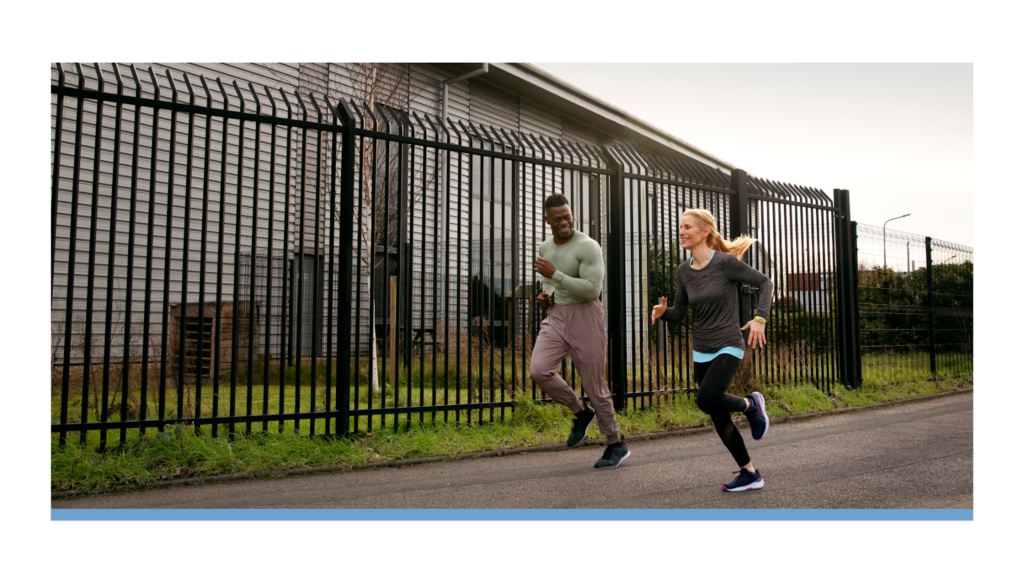
For facilities with elevated security requirements, anti-climb fencing and rigid security panels are among the most effective security fence ideas available. These systems are designed to prevent cutting, scaling, and forced entry.
They are commonly installed at data centers, transportation hubs, substations, and restricted-access facilities where perimeter failure is not an option. Panel spacing, height, and mounting details are critical to performance.
Controlled Access Gates for Operations
In commercial settings, gates must balance security with efficiency. Sliding, swing, or cantilever gates can be paired with badge readers, keypad systems, or vehicle access controls to manage traffic without slowing operations.
Poorly planned gates often become bottlenecks or weak points. Thoughtful placement and system integration prevent both.
Layered Perimeter Zones
Many industrial properties benefit from layered security rather than a single fence line. Inner fences, secure yards, or equipment enclosures add depth to the perimeter and reduce risk if the outer boundary is compromised.
GS Parcel installs these systems with attention to anchoring, tensioning, alignment, and perimeter continuity. The goal is a fence that holds up under daily use, integrates with site operations, and eliminates gaps that create vulnerabilities over time.
4 Common Types of Materials Used in Security Fencing
Choosing the right material is one of the most important decisions behind practical security fence ideas. The material determines how well the fence performs under daily use, how much maintenance it requires, and how long it will reliably protect the property.
- Chain Link
Chain link fencing remains one of the most widely used options due to its balance of durability and cost efficiency. It performs well across large perimeters where visibility is crucial, making it easier to monitor activity and support lighting or surveillance systems.
This material is commonly used for warehouses, utility areas, industrial yards, and commercial back-of-house zones. When paired with height extensions, tension wire, or security toppings, chain link can scale up to meet higher security needs without high cost.
- Steel
Steel fencing offers maximum strength and long-term durability. It is often selected for high-security environments where deterrence and impact resistance are critical. Steel systems maintain their structural integrity over time and perform reliably in high-traffic or high-threat areas.
Because of its strength, steel fencing is frequently used for data centers, manufacturing facilities, transportation infrastructure, and restricted-access sites where perimeter failure is not an option.
- Aluminum
Aluminum fencing provides a strong yet lightweight alternative to steel, with the added benefit of corrosion resistance. It is commonly used in environments where appearance matters alongside security, such as office campuses, mixed-use developments, and public-facing facilities.
While aluminum is not as heavy-duty as steel, it performs well in controlled-access environments and offers a cleaner, more architectural look.
- Vinyl & Composite
Vinyl and composite fencing systems are valued for their low maintenance and visual consistency. These materials do not rust, rot, or require frequent refinishing, making them attractive for residential or light commercial use.
However, they are typically better suited to privacy and boundary definition than to high-risk security applications. They perform best when combined with proper height, reinforced posts, and controlled access points.
GS Parcel helps clients select fencing materials based on environmental exposure, usage intensity, maintenance expectations, and overall security goals to ensure long-term performance.
Security Features That Strengthen Any Fence System
Substantial security fence ideas extend beyond the fence panels themselves. Supporting features often make the difference between a basic boundary and a truly effective security system.
- Height & Anti-Climb Design: Fence height plays a critical role in deterrence. Taller fences naturally reduce unauthorized access, while angled tops and anti-climb designs prevent scaling. These elements are vital in areas where fencing is exposed or accessible to the public.
- Gates and Access Control: Gates are often the most vulnerable points along a fence line. Well-placed gates help control entry without disrupting daily operations. Pairing gates with keypads, badge readers, or vehicle access systems ensures that movement remains authorized and traceable.
- Lighting & Visibility: Lighting along fence lines improves visibility, supports surveillance, and discourages after-hours activity. Well-lit perimeters make it easier to detect unusual movement and reduce blind spots that intruders often exploit.
- Surveillance Integration: Fences are most effective when they work in tandem with cameras and monitoring systems. Coordinating fence layout with camera coverage creates a layered security approach in which physical barriers and visibility reinforce one another.
Common Security Fence Mistakes to Avoid
Many security issues do not stem from the fence itself, but from avoidable planning and execution errors.
- Selecting materials without considering environmental factors: Exposure to moisture, salt, or heavy use can shorten a fence’s lifespan if materials are not carefully chosen.
- Underestimating gate placement and access flow: Poorly located gates can disrupt operations or become weak points in the perimeter.
- Ignoring local codes or permit requirements: Fencing that does not meet zoning or regulatory standards can lead to delays, fines, or costly rework.
- Improper installation that creates gaps or instability: Even the strongest materials fail when posts are misaligned, anchoring is weak, or tension is inconsistent.
Professional planning and installation remove these risks, ensuring your fence functions perfectly from the start. Here’s how GS Parcel offers you optimal assurance and peace of mind.
Create a Safer, More Secure Perimeter for Your Property with GS Parcel
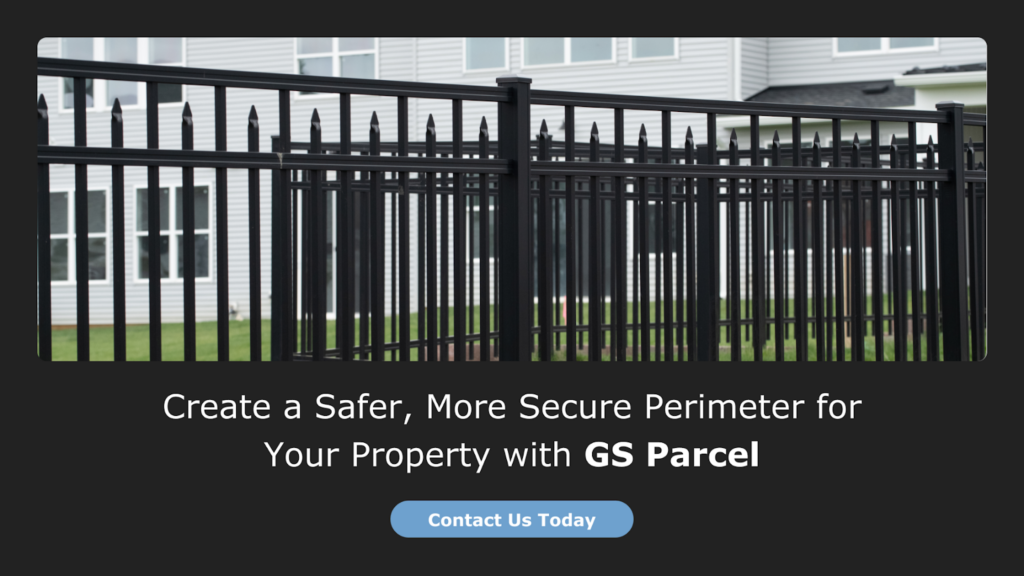
Modern properties face growing pressure to manage access, protect assets, and reduce risk without disrupting daily operations. A well-designed security fence does more than mark a boundary. It reinforces safety, guides movement, and strengthens overall site control.
GS Parcel helps residential, commercial, and institutional properties plan and install security fencing solutions built around real-world use. From material selection and layout planning to precise installation, we focus on fences that are compliant, durable, and designed to perform over time, not just on day one.
Ready to secure your property with a fencing system that fits your space and risk level? Contact GS Parcel to plan the right solution for your site.
