
Large windows have become a defining feature in modern offices, schools, restaurants, and commercial buildings. Natural light improves the look and feel of a space, but uncontrolled sunlight can quickly create glare, overheating, and uncomfortable indoor conditions. Rooms with strong afternoon sun exposure often experience rising temperatures, screen visibility issues, and fading of furniture or interior finishes.
According to the U.S. Department of Energy, approximately 76% of the sunlight that falls on standard double-pane windows enters a building as heat. This increase in solar heat gain can place additional strain on cooling systems and reduce occupant comfort throughout the day.
This is where solar shades become especially valuable. They filter sunlight while still preserving outdoor visibility. These systems help reduce glare, improve daylight control, and support more energy-efficient interior environments without making the space feel closed off.
What Are Solar Shades?
| Solar shades are specialized roller shades made with mesh-like woven fabrics that filter sunlight before it enters the space. Instead of completely darkening the room, these systems reduce glare, manage heat gain, and soften incoming daylight while preserving visibility to the outdoors. |
Commercial solar shades are commonly used in:
- Offices
- Schools and universities
- Restaurants and hospitality spaces
- Healthcare facilities
- Retail storefronts
- Commercial lobbies and shared workspaces
The fabric structure is what makes solar shades different from standard roller shades. Small openings within the woven material allow occupants to maintain outward visibility during daytime conditions while reducing the intensity of direct sunlight.
The primary functions of solar window treatments like solar shades include:
- Glare reduction for offices
- Filtering UV rays
- Lowering solar heat gain
- Maintaining outdoor visibility
- Improving occupant comfort
- Supporting daylight management
Unlike blackout shades, solar shades do not fully eliminate incoming light. Their goal is controlled filtration rather than complete darkness.
This distinction is important because many buyers assume all roller shades provide the same level of privacy and light blocking. Solar shades are created primarily for daytime performance.
How Do Solar Shades Work?
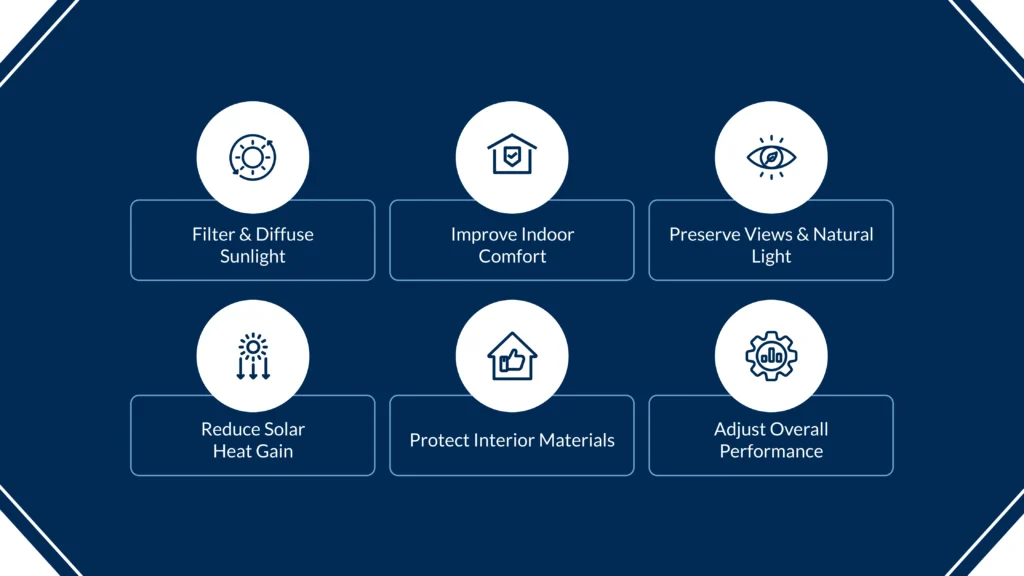
Here’s how solar shades work:
Filter & Diffuse Sunlight
Solar shades work by filtering incoming sunlight before it fully enters the building interior. The woven fabric diffuses harsh light, helping reduce glare and heat buildup while still allowing usable daylight to pass through the space.
Improve Indoor Comfort
As sunlight becomes softer and more controlled, indoor environments feel more comfortable throughout the day. Solar shades help reduce direct glare, improve visual comfort, and create more balanced daylight distribution across workspaces and common areas.
Preserve Views & Natural Light
One of the biggest advantages of solar shades is their ability to maintain outward visibility while controlling sunlight intensity. During daytime conditions, occupants can typically continue to see outside while limiting visibility from the exterior into the interior.
Reduce Solar Heat Gain
Large glass facades often allow significant solar heat into commercial buildings, especially along south- and west-facing elevations. Solar shades help reduce the amount of solar radiation entering the space, which can lower cooling loads and support more consistent indoor temperatures.
Protect Interior Materials
Solar shades also help reduce UV exposure inside the building. Filtered daylight helps minimize fading and long-term deterioration of furniture, flooring, fabrics, merchandise, and interior finishes while keeping spaces bright and visually open.
Adjust Overall Performance
The effectiveness of solar shades depends heavily on openness percentage, which determines how much light, visibility, and heat transfer the fabric allows. Different levels of openness help balance glare control, privacy, daylight transmission, and exterior views based on the space’s needs.
Several performance benefits occur simultaneously when sun-blocking shades are installed. The exact performance of solar shades, however, depends heavily on one important technical factor: openness percentage.
What is the Openness Factor in Solar Shades
The openness factor is one of the most important concepts in solar shade specification. It refers to the percentage of openness within the woven fabric and determines how much light, heat, and visibility pass through the material.
Lower openness percentages provide:
- Stronger glare reduction
- Better heat rejection
- Increased daytime privacy
- Reduced outward visibility
Higher openness percentages provide:
- Better outside views
- Brighter interiors
- More daylight penetration
- Reduced glare control
The right openness factor depends on window orientation, room function, and occupant comfort requirements.
1% Openness
A 1% openness fabric provides the strongest glare reduction and solar control among standard solar shade fabrics.
Best suited for:
- West-facing offices
- High-glare workspaces
- Conference rooms
- Buildings with intense afternoon sun exposure
This lower level of openness significantly increases privacy and reduces brightness while still preserving limited outward visibility.
3% Openness
A 3% openness factor is among the most common commercial selections because it effectively balances visibility and glare control.
This option provides:
- Good outward visibility
- Moderate glare reduction
- Balanced daylight filtering
Many offices use 3% fabrics because they improve screen visibility without making interiors feel overly dark.
5% Openness
A 5% openness factor allows more daylight into the space while maintaining moderate solar control.
Benefits include:
- Brighter interiors
- Better outdoor visibility
- Softer filtering effect
This level of openness is often used in collaborative environments or in buildings that prioritize strong daylight access.
10% Openness
A 10% openness fabric offers the greatest visibility and daylight penetration among standard commercial solar fabrics.
Best applications include:
- Lower-glare building orientations
- Decorative daylight filtering
- Spaces prioritizing visibility over glare control
Because higher-openness fabrics allow more sunlight to pass through, they offer less glare reduction and less daytime privacy than lower-openness options.
| Openness Factor | Visibility | Glare Reduction | Privacy | Best Use |
| 1% | Lower visibility | Maximum glare reduction | Higher daytime privacy | West-facing offices |
| 3% | Balanced visibility | Strong glare control | Moderate privacy | Commercial offices |
| 5% | Better visibility | Moderate glare reduction | Lower privacy | Shared workspaces |
| 10% | Highest visibility | Lowest glare reduction | Minimal privacy | Low-glare spaces |
Choosing the correct openness factor is one of the most important decisions during specification because it directly affects comfort and performance throughout the building.
Best Commercial Applications for Solar Shades
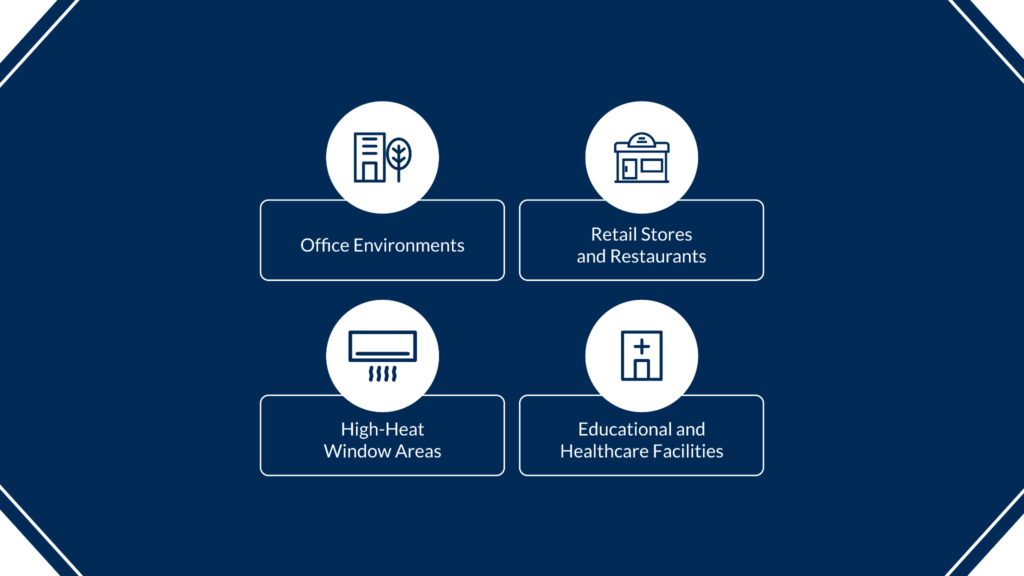
Different commercial environments use solar shades for different reasons. The flexibility of these systems makes them useful across a wide range of building types.
Office Environments
One of the most common applications of solar shades is reducing glare in offices. Large windows improve daylight access, but uncontrolled sunlight can create major screen visibility issues throughout the workday.
Solar shades help:
- Reduce monitor glare
- Improve visual comfort
- Lower heat buildup near windows
- Maintain daylight without excessive brightness
This creates more comfortable work conditions while preserving outdoor visibility.
Retail Stores and Restaurants
Retail spaces and restaurants often rely on large storefront windows to create an open and inviting atmosphere. Direct sunlight, however, can damage furnishings, flooring, and merchandise over time.
Commercial solar shades help:
- Reduce UV exposure
- Protect interiors from fading
- Preserve storefront visibility
- Maintain natural daylight conditions
Restaurants also benefit from improved occupant comfort during peak daylight hours.
High-Heat Window Areas
Buildings with large south-facing or west-facing windows often experience excessive heat buildup during the afternoon.
Solar shades help manage:
- Solar heat gain
- Temperature fluctuations
- Occupant discomfort near glass
- Increased HVAC demand
This is especially important in modern buildings with expansive curtainwall systems.
Educational and Healthcare Facilities
Schools, universities, healthcare facilities, and waiting areas often require balanced daylight conditions that support comfort without excessive brightness.
Solar shades help maintain:
- Softer daylight conditions
- Reduced glare
- Improved comfort for occupants
- Better visual consistency throughout the day
While solar shades perform well in many commercial environments, they are not the right solution for every application.
When Are Solar Shades NOT the Right Choice
One of the biggest misconceptions about solar shades is that they provide full privacy at all times. In reality, solar shades are primarily created as daytime light-management systems.
During daytime conditions, occupants can usually see outward, while visibility inward remains limited because exterior light levels are brighter than interior lighting.
At night, however, this relationship reverses.
When interior lights are on at night, people outside may be able to see inside through the fabric. This means solar shades are generally not ideal for:
- Bedrooms
- High-security spaces
- Areas requiring full nighttime privacy
- Spaces requiring blackout conditions
In these situations, blackout shades or dual shade systems are often better solutions.
This distinction is important because selecting the wrong shade system can lead to performance issues that are difficult to correct after installation.
Why Should You Consider Professional Solar Shade Installation
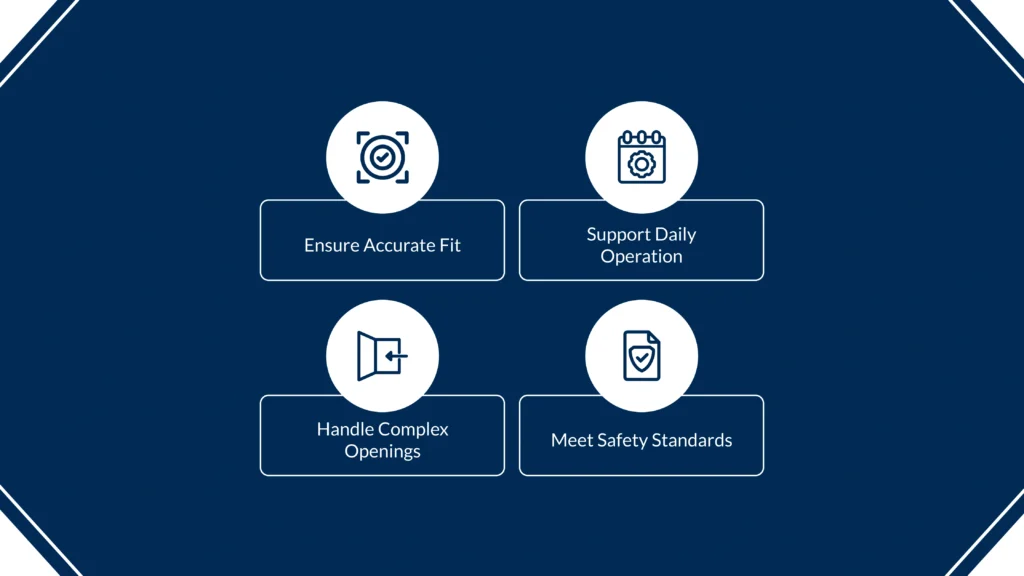
Even high-quality solar shades can underperform if they are improperly measured or installed. Precise installation affects everything from glare control to appearance and long-term operation.
Ensure Accurate Fit
Precise measurements play a major role in how effectively solar shades perform across the entire window surface. Even small sizing inconsistencies can create light gaps, uneven alignment, or inconsistent fabric tension, which affect glare control and overall appearance.
Poorly fitted shades may also place unnecessary strain on operating components, leading to premature hardware wear.
Support Daily Operation
Commercial shade systems are used constantly throughout the day, especially in offices, schools, healthcare facilities, and shared commercial spaces. Professional installation helps ensure smooth shade movement, stable mounting, and reliable hardware performance under long-term daily operation.
Properly installed systems are more likely to maintain consistent functionality and appearance over extended use.
Handle Complex Openings
Large commercial glazing systems often require specialized installation methods and customized configurations.
Professional expertise becomes especially valuable for:
- Large window walls
- Multi-story glazing systems
- Motorized shade integration
- Custom commercial openings
Meet Safety Standards
Commercial projects frequently require materials and hardware that comply with building and safety requirements.
Professional installers can help specify:
- Fire-rated materials
- Commercial-grade hardware
- High-occupancy compatible systems
- Durable mounting solutions for public spaces
How GSS Window Solutions Improve Long-Term Shade Performance
Commercial shade systems are expected to perform consistently under daily use, changing daylight conditions, and long operating hours. Long-term performance depends on more than just fabric selection. Proper measurements, durable operating systems, and coordinated installation all affect how well solar shades function over time.
Granite State Specialties supports commercial projects with sun-blocking shades for high-use commercial environments. This includes support for offices, educational facilities, healthcare buildings, retail spaces, and large commercial interiors where daylight management and operational durability are critical.
GSS window solutions focus on:
- Precise field measurements for accurate shade alignment
- Professional installation for large commercial openings
- Heavy-duty operating systems designed for frequent use
- Motorized shade integration for automated daylight control
- Commercial-grade fabrics and hardware
- Coordinated installation across multi-window systems
GSS helps project teams select commercial solar shades that align with building orientation, openness factor requirements, glare control goals, and occupant comfort needs. Support also includes guidance for large window walls, high-exposure facades, and automated shading systems commonly used in modern commercial construction.
Keep Your View and Reduce the Heat with Solar Shades from GSS
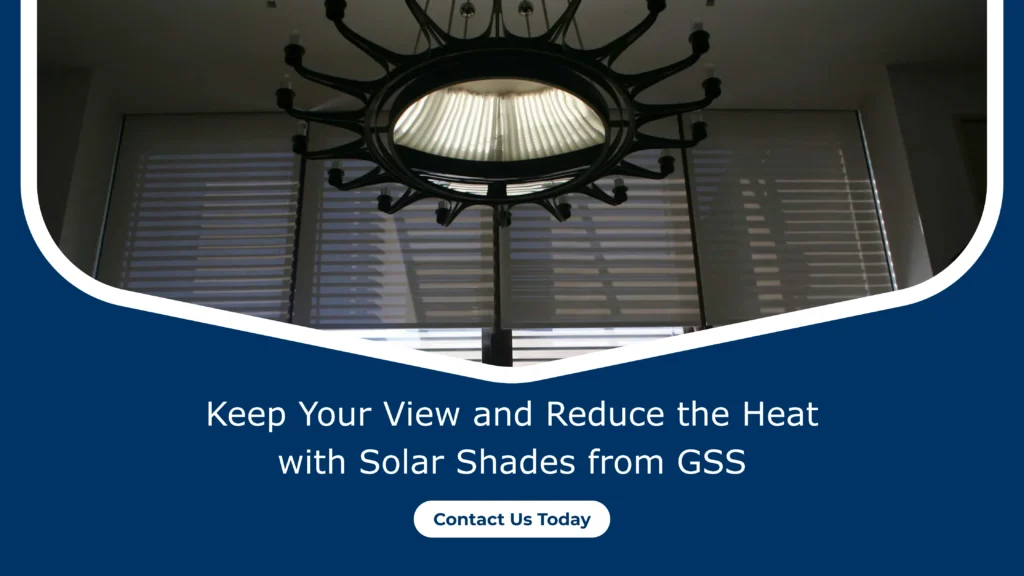
Solar shades help commercial buildings balance natural light, glare control, heat reduction, and occupant comfort without completely blocking outdoor visibility. When properly specified, these systems improve indoor environments while supporting better daylight management throughout the building.
Primary benefits of solar shades include:
- Glare reduction
- UV filtering
- Solar heat gain reduction
- Improved occupant comfort
- Daylight management
- Modern architectural appearance
The right openness factor, fabric selection, and installation strategy all influence how effectively solar shades perform within a commercial environment.
Keep your view and lose the heat. Contact Granite State Specialties today for a consultation on the best solar shades for your building.
FAQs
1. What are solar shades, and when should they be used for windows?
Solar shades are specialized window coverings that reduce glare, filter UV rays, and lower solar heat gain while still maintaining outdoor visibility. They are best used in offices, schools, restaurants, healthcare facilities, and commercial buildings with large windows that receive strong daylight exposure.
2. What is the difference between solar shades and roller shades?
Solar shades are a type of roller shade specifically engineered with mesh-like fabrics that filter sunlight while preserving views. Standard roller shades may use blackout or translucent fabrics for privacy or complete light blocking rather than daylight filtering.
3. What is the difference between 3% and 5% openness in solar shades?
A 3% openness factor provides stronger glare reduction and greater daytime privacy while allowing moderate outdoor visibility. A 5% openness factor allows more daylight and better outside views, but provides less glare control and reduced privacy. West-facing offices and high-glare spaces often benefit more from 3% openness fabrics.
4. Do solar shades provide privacy at night?
Solar shades provide limited daytime privacy because brighter outdoor conditions reduce visibility into the building. At night, however, interior lighting can make indoor spaces visible through the fabric. Spaces that require full nighttime privacy typically use blackout shades or dual-shade systems instead.
5. Do solar shades help reduce energy costs?
Solar shades help reduce solar heat gain, improving indoor comfort and reducing cooling demands in buildings with large areas of glass. This makes them a popular option for energy-efficient commercial window treatments. It is one of the reasons solar shades are often considered energy-efficient shades in modern commercial design.
